You Are Here: Home » How to Play Table Tennis » Recovery and Anticipation
Table Tennis Tactics
Your table tennis tactics during a match are crucial.
But what else do you need to consider?
By Martin Hughes
Owner and Editor
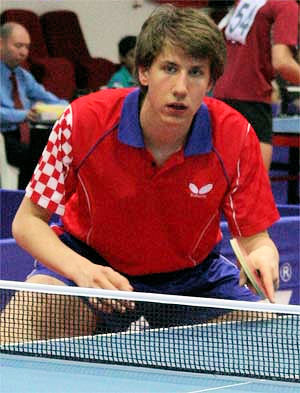 by courtesy of the ITTF
Whatever table tennis tactics you use, two important factors which influence how you play are your Recovery and Anticipation.
Table tennis has become an extremely fast game, so you must be ready to play your stroke, and then recover and be ready to play your next stroke ... whilst also anticipating what your opponent will do next.
TABLE TENNIS EXPERT
REVEALS HIS SECRETS
Click Here For Details

Click here for a large selection of
table tennis equipment at Megaspin *
Click here for a large selection of
table tennis equipment at Bribar *
^ Top of page ^
So let's take a look at these two tactics...
Table Tennis Tactics - Recovery
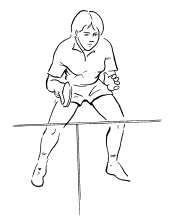
Whatever tactics you use, and whatever stroke you play, you must always assume that your shot will be returned by your opponent ... so you must be ready to play your next shot.
Therefore, once you've played your stroke, you must adopt a "ready" stance and be prepared for whatever shot your opponent plays next.
This picture (right) shows the ready stance, also known as the ready position.
The racket angle is vertical and you should adopt a relaxed stance.
TABLE TENNIS EXPERT
REVEALS HIS SECRETS
Click Here For Details
Click here for a large selection of
table tennis equipment at Megaspin *
Click here for a large selection of
table tennis equipment at Bribar *
Where you actually need to stand, in preparation for your next stroke, will be determined by the position you played your previous stroke to, because your opponents options will be limited by the angle you created.
Let's look at an example for a right handed player...

If you play a shot to your opponent's forehand corner, he can only play his next shot within the area shown here by a triangle.
So the corners of the triangle indicate the two extreme points that he could play to.
You therefore need to be ready to play your next stroke from any point between those two extremes.
Therefore the position of your feet, left (L) and right (R), should be as shown here.

Conversely, if you play a shot to your opponent's backhand corner, he can only play his next shot within the area shown here by a triangle.
So the corners of the triangle indicate the two extreme points that he could play to.
You therefore need to be ready to play your next stroke from any point between those two extremes.
Therefore the position of your feet, left (L) and right (R), should be as shown here.
As well as having a good recovery, it's also important that you're able to anticipate what your opponent will do next ... and prepare accordingly ...
^ Top of page ^
Table Tennis Tactics - Anticipation
During a table tennis match, the amount of time you have available in order to prepare to play your opponent's return is very short.
And if you simply react to the movement of the ball after it's been struck by your opponent, the time is even shorter.
So by anticipating the direction and type of stroke which your opponent is likely to play, you'll maximise the time available to prepare your own stroke.
In addition to always watching the ball, you should also try to anticipate your opponent's intentions by specifically watching his racket and racket arm.
Additionally, knowledge of your opponent's game, particularly in terms of his strengths and weaknesses, will help you to anticipate his intentions and give you that extra edge.
^ Top of page ^
| MORE PAGES ABOUT HOW TO PLAY TABLE TENNIS |
|---|
For more information on how to play table tennis and improve your game, take a look at my other tips and techniques articles...
Basic Skills
Advanced Skills
Strategies and Tactics
Tips
Skill Tests
Exercises
E-Books
|
Click here for a large selection of
table tennis equipment at Megaspin *
Click here for a large selection of
table tennis equipment at Bribar *
^ Top of page ^
You Are Here: Home » How to Play Table Tennis » Recovery and Anticipation